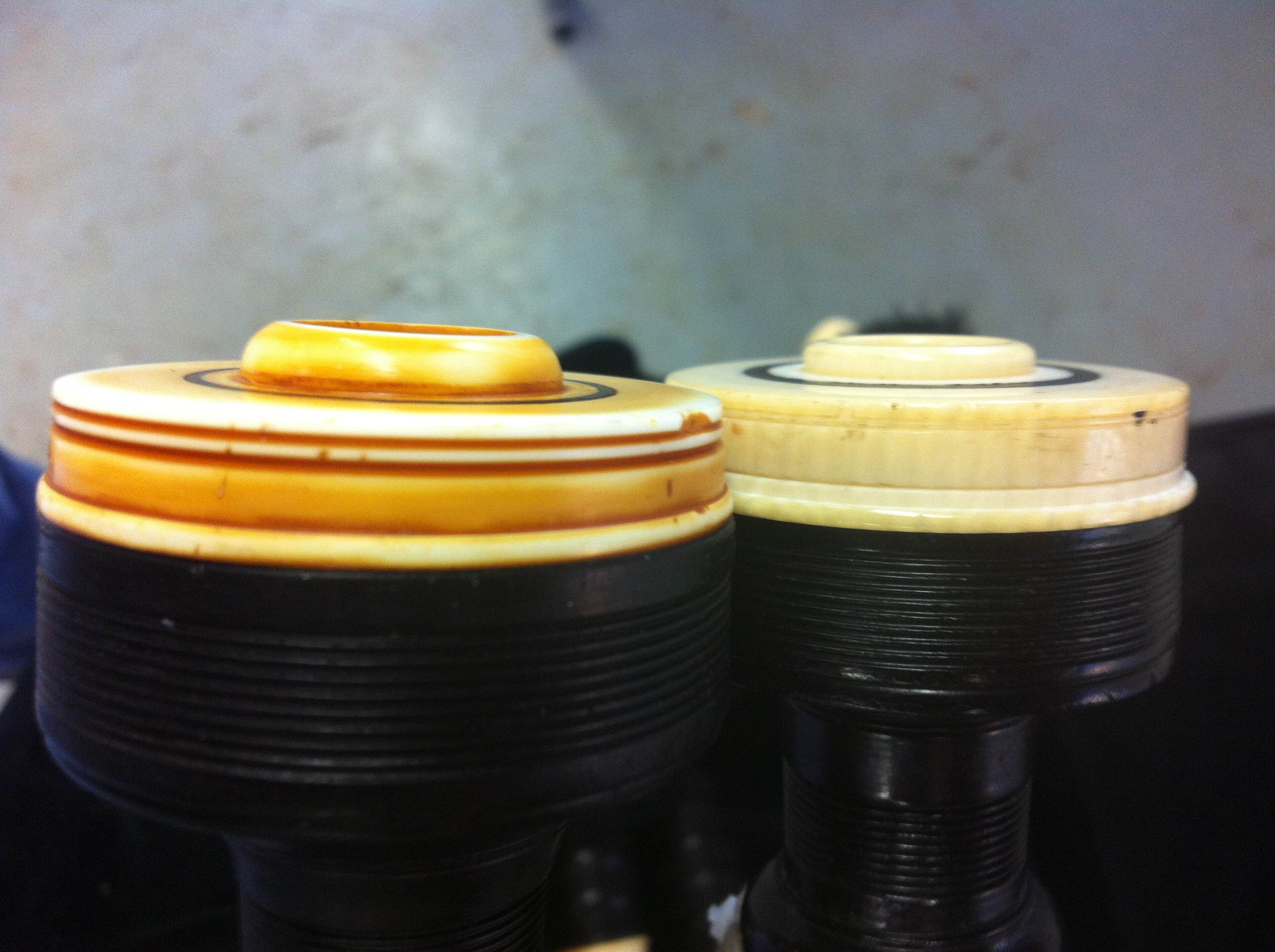
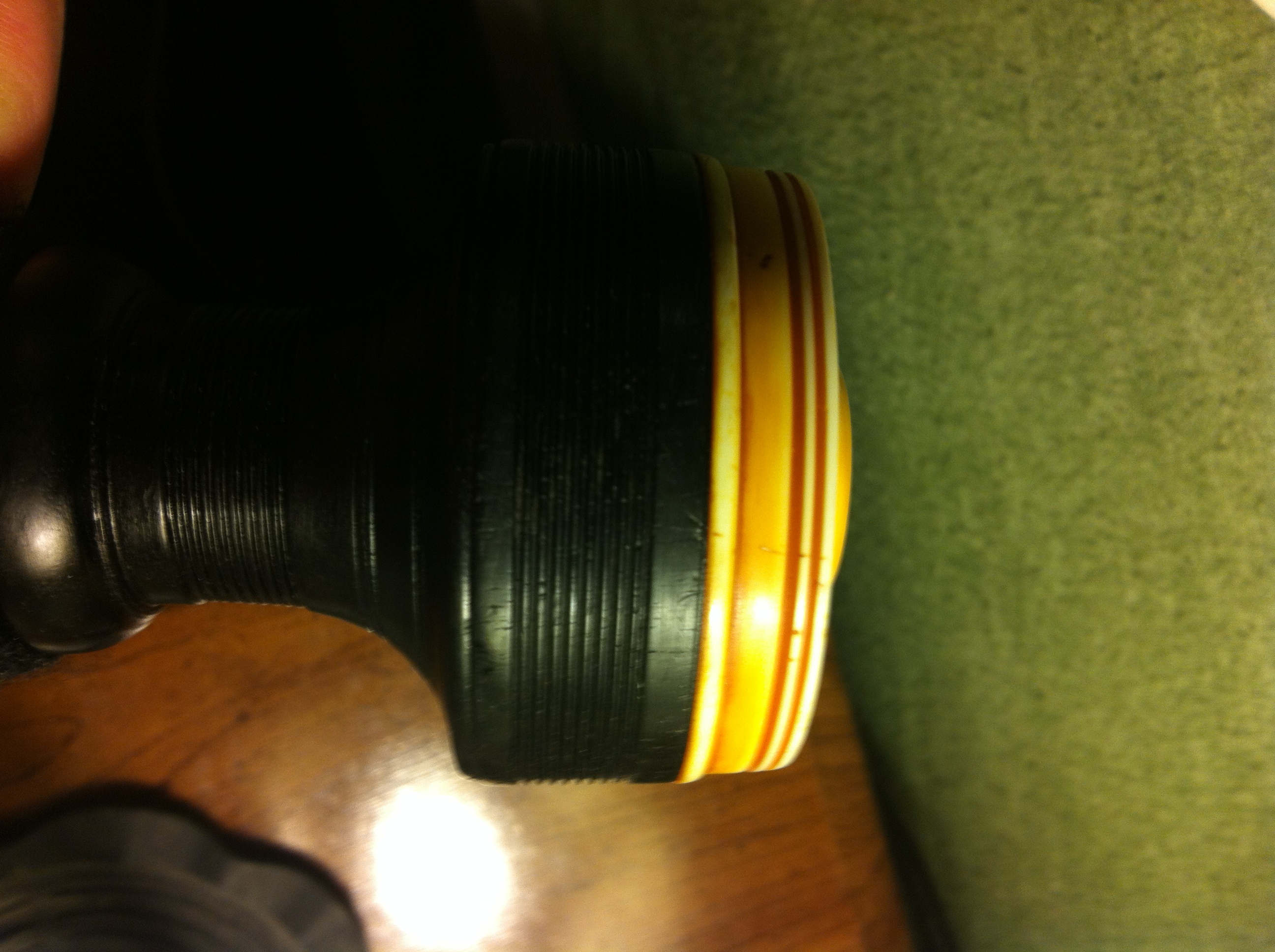
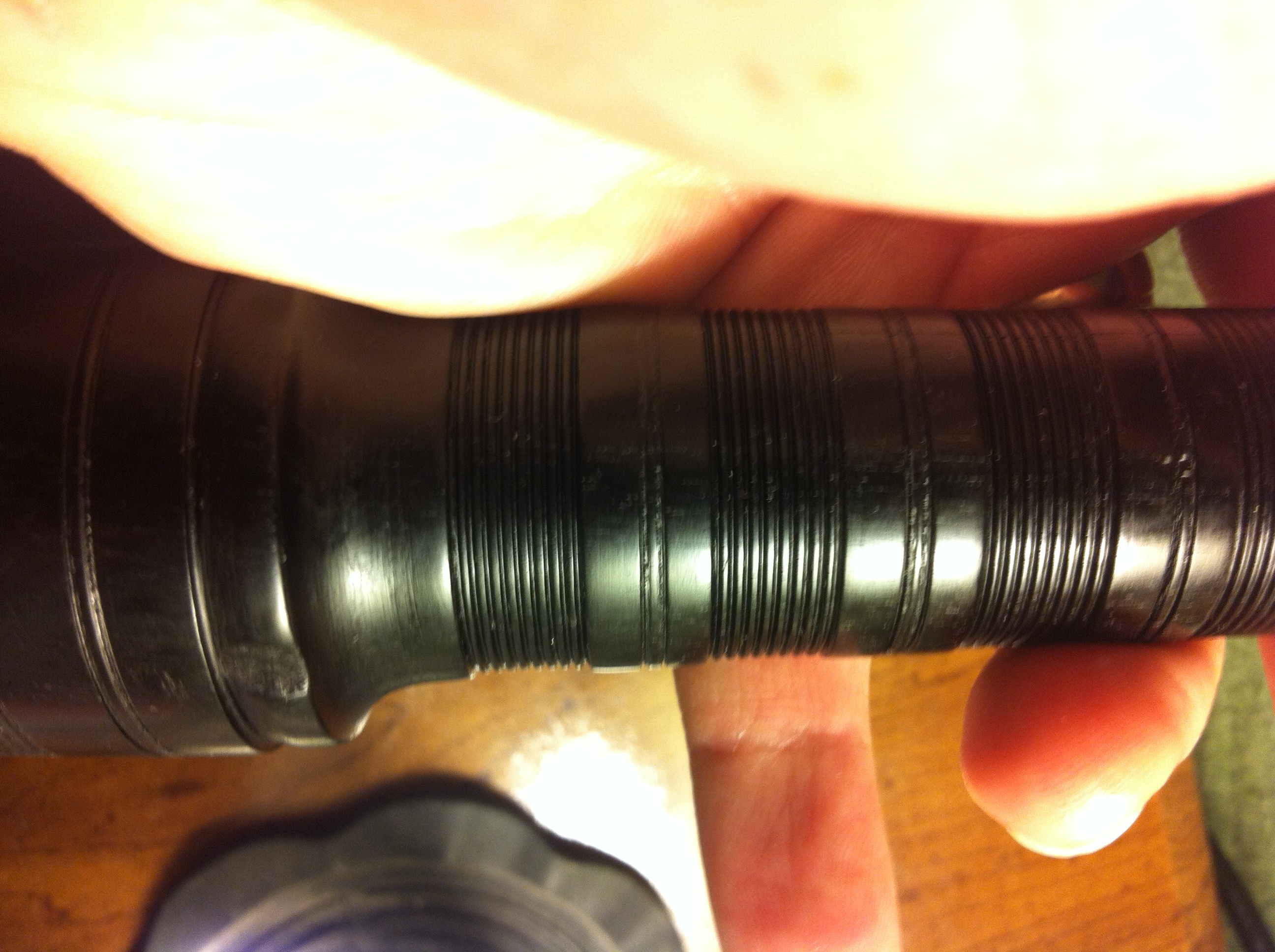
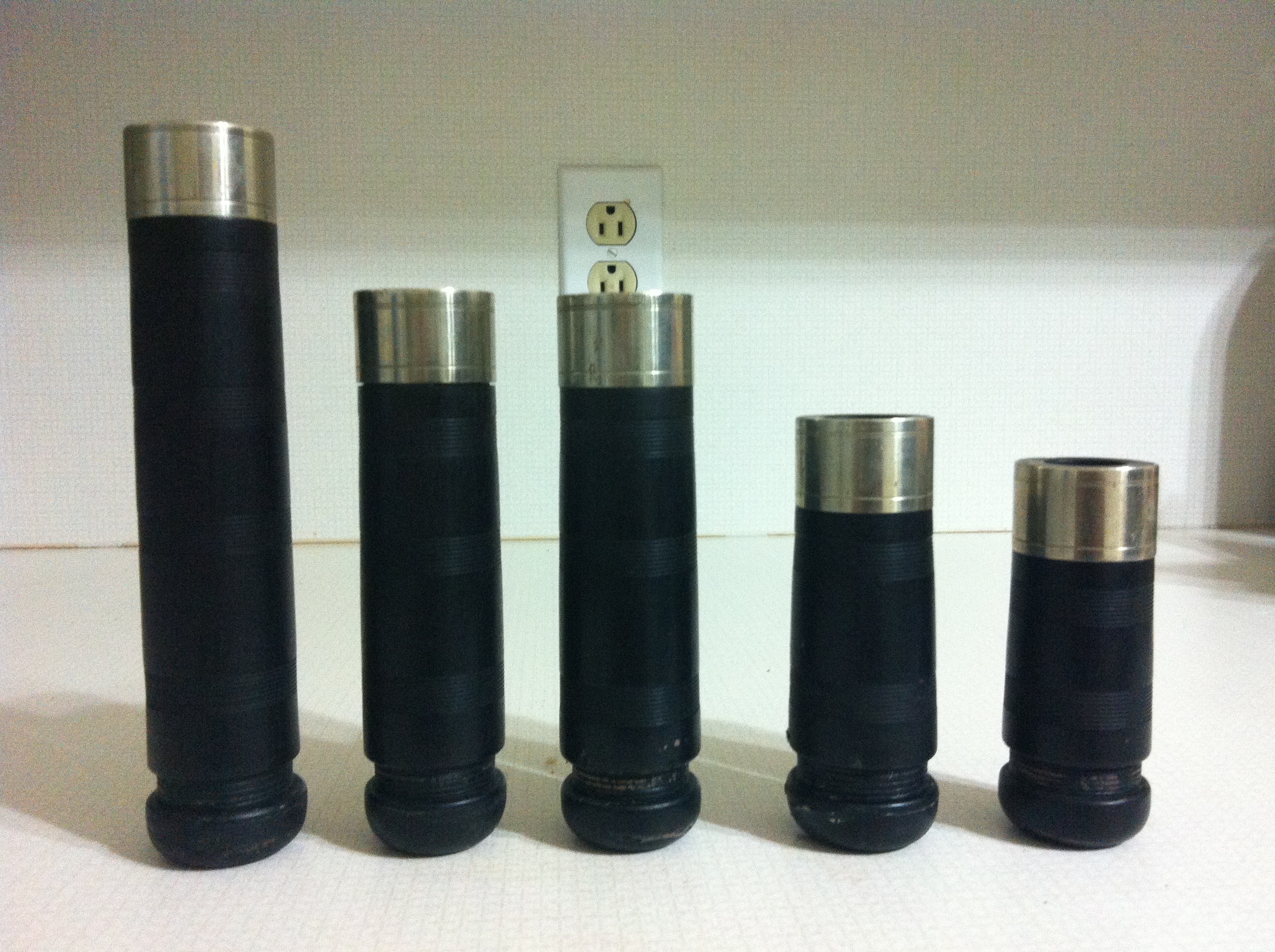
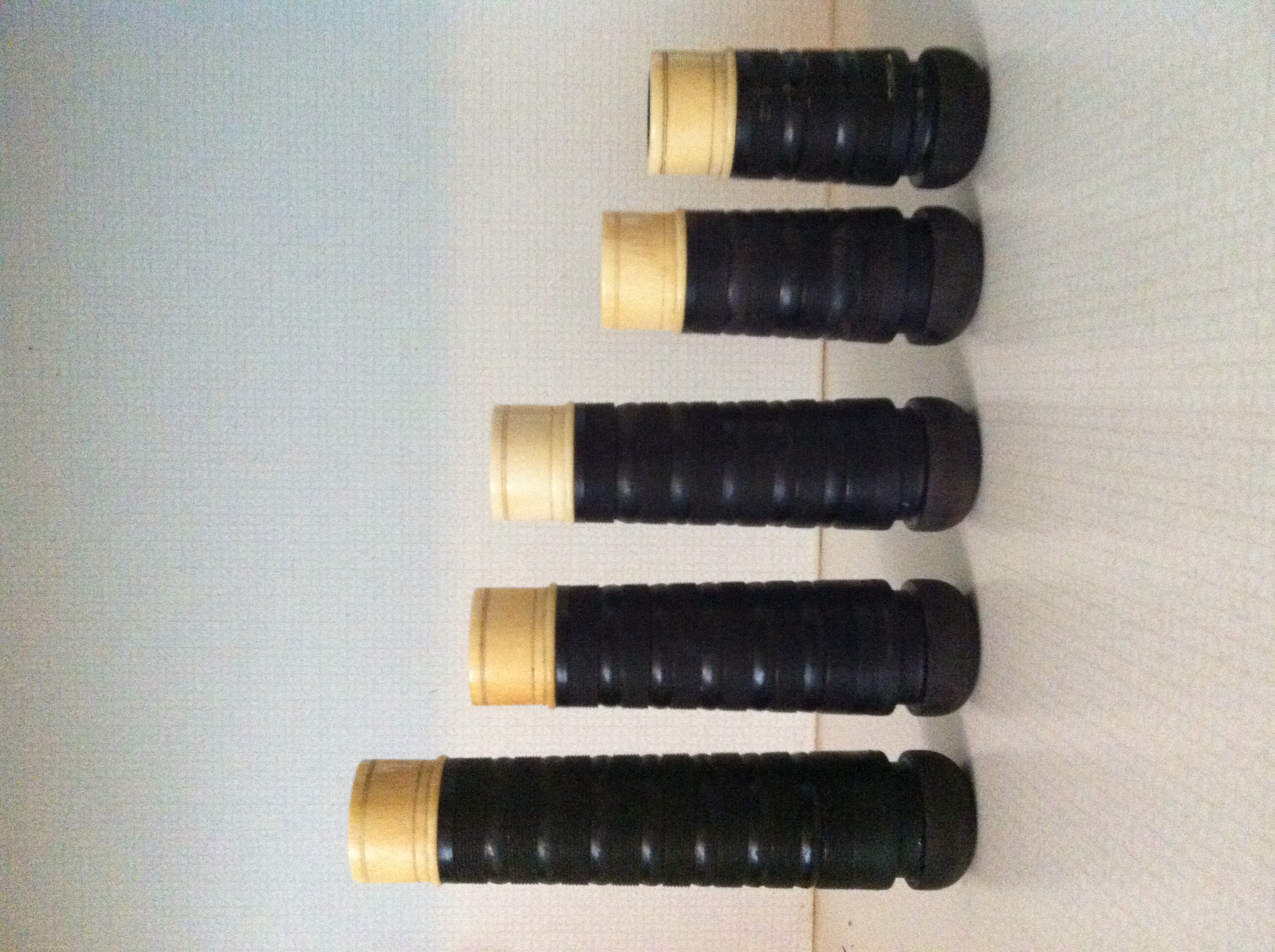
Got the new Kinnaird Evolution drone reeds in the other day. They may look very similar, but they’re very different beasts.

Below are two recordings. I’ve used regular Kinnaird’s in my Gellaitry’s as standard for quite some time now. So I figured the best test would be to try the Evolution reeds in there first.
Gellaitry bagpipes with old Kinnaird drone reeds: Gallawa’ Hills & The Quaker
Gellaitry bagpipes with Kinnaird Evolution drone reeds: Gallawa’ Hills & The Quaker
Here are the same recordings but made with the Blue Mikey Digital for iPhone 4 located in the same spot as my Zoom H2 utilizing it’s auto-gain feature for comparison to the Zoom H2 recordings above. Recorded using the iPhone’s native Voice Memo app. Next time, I’ll try the AudioTools Recorder.
What happens when you don’t practice in 3 months (skip it):
Kinnaird Evolution drone reeds: Some Jigs
Insert random stuff here. Here are the Evolution reeds in the Jeffers pipes, drones only. This part goes along with an experiment having to do with mismatching tenor drone reeds to get a broader spectrum of overtones. I hypothesized that this makes tuning easier because once the tenors are pitched close it is harder to hear frequency beating in the fundamental so you resort to overtone frequency beating to really dial it in. If the tenors are mismatched then perhaps they emit different overtones (as determined by amplitude, or the lack thereof, not that the overtones occur at different frequencies) and so there is less overlap to generate frequency beating. Therefore, they sound in tune once the fundamentals are really close because there is not enough overlap in the overtone spectrum to make frequency beating that is audible “enough”. So, I screwed the tuning screws all the way into the nose cone and made the first recording and then, without moving my feet to preserve relative orientation to the microphone, I screwed one tuning screw all the way out until it was flush with the end thus requiring that I flatten the drone by pulling the drone top way up. The results are below. Mismatching the drones seemed to decrease the overall volume with both the first and second overtone losing significant amplitude (again, assuming my efforts to only change the one variable, the pitch of the reed, was successful). My expectations were that the first overtone would increase because generally, in my experience, the longer the tenor drone the more pronounced the first overtone and more diminished the second overtone; and vise versa (see this post for previous experiment showing this relationship). However, both overtones diminished as can be seen in the frequency analysis below. Further down is the .wav file, matched first, mismatched second.

All that is beside the point of this post (sort of, it’s a mixed bag as it is). Well, what did I think of the new Evolution reeds? Well, I put my old Kinnaird’s back in the Gellaitry’s. The new Evolution reeds are very well matched together, the bass with the tenors. The tenors are also very bold, very similar to the cane tongued Ackland reeds I was trying for a little while. However, in that boldness, they sound a bit dirty. There’s just tone in there that is a little off putting. Not an overtone as above, but just a dirty sound. I’ve found the tenors to be a bit harder to tune because of their massive boldality. Of course, I’m indoors and such.
I’ve also tried the Evolution reeds in many other pipes. In that regard, they are always well matched in strength from bass to tenor, and if your band is getting hits for quiet drones, these reeds are definitely a place to start. However, in no case did I think that the Evolution drone reeds sounded better than what I had already decided sounded best from the previously commercially available drone reeds. I’ve spent a lot of time getting the tone out of each set of pipes to be just right for that set of pipes and so to expect one set, the Evolution, to displace all those is unreasonable. But, I just haven’t found the match yet. Pipes tried with drone reed preference listed to the side:
Gellaitry: old Kinnaird
Jeffers: Selbie
Dunbar: I forget, but have heard better
Robertson: Rocket
Colin Kyo: Canning
And that is my segue into the last part of this post. I LOVE the sound of Canning tenors in Colin Kyo drones. However, the carbon fiber bass is just a tad on the quiet side, in my opinion. You can hear what I mean in this post and this post. So, having been lent the pipes again, I figured I’d have another go at matching a good, bolder bass drone reed. I’ll note that the Canning’s in Colin Kyo are the exact opposite of the dirty sound you get with Evolution reeds, it is as smooth as silk without being mellow.
Last segue is that a piper friend is getting married next weekend and I need to know what to play for them, so I recorded some wedding music for him to listen to and approve. The last link is an MSRHJ for some more traditional music. These were recorded with the Canning tenors and a Henderson Harmonic Deluxe bass in Colin Kyo bagpipes. Of course, a Colin Kyo chanter with a Husk reed.
bridal_chorus_faithful_and_true_lohengrin (sight read)
recessional_wedding_march (sight read)
recessional_a_midight_summers_dream (sight read)
Other wedding type tunes include Mairi’s Wedding, Unst Bridal March (old recording of Dunbars, I think), and Highland Wedding.
msrhj (take note, I haven’t played any of this since November)