Category Archives: Bagpipe Sound Research

Highland Pipes in G

As with most of my piping adventures, this one starts with someone asking me how to do something and then I take it way too far; and end up somewhere really cool! A local piper asked me, “How do you get your drones to tune to A440?” The answer, brass tubing! For bass drones and reeds, you’ll probably want 3/8″ K&S engineering brass tube, for tenors maybe the same or maybe 11/32″. It has to go on the outside of the reed tenon (where the hemp on the reed goes) but also on the inside of the drone reed seat (so it can’t be too big around). There are commercial drone extenders available but they do not get you down to A 440 Hz. The drone reed has to basically be sticking out the bottom of the drone stock just a little bit to have any chance of getting to A 440 Hz. See photo below of a tenor drone.

brass_drone_reed_extender

I’ve had limited success with 1/4″ tube put inside the bottom of the drone reed. It would seem to be drone reed dependent.

Of course, since I have yet to take this too far (there’s nothing new so far) I’m not actually going to use this to play with an A 440 Hz chanter (although I do have one). I’m going to use these now super flat drones to play with a normal A 470+ Hz chanter. Except, I won’t be tuning the drones to A but to the note G. Woot!

These are 1950’s Henderson pipes with Rocket drone reeds, Colin Kyo Pipeband/Samurai chanter, Shawn Husk chanter reed.

Grimstock and Dick’s Maggot – Watch this performance on YouTube

Keelman Ower the Land – Watch this performance on YouTube

Untitled and Ulverston Volunteers – Watch this performance on YouTube

What’s tricky about tuning the drones to G is you have to retune the entire chanter. In a pinch it means taping every note except the Gs, and maybe F(#). I also tune the C to a C natural so as to play in the key of G. The tuning offsets can be had in the this chart (shift the note names around until the G is in the “A” spot).

I can tell, you’re excited, because it sounds so cool! Hey, you can do it too! How? Go buy some brass tube (hobby or art shops usually have this), a tube cutter, and a cheap hand reamer (harbor freight has these). You’ll also need some teflon tape to seal the gap between the tube and the drone reed whether the tube goes on the outside of the drone reed tenon or the inside. Don’t forget the tube will have to also seat well in your drone reed seats. How to actually get it down flat enough is up to your pipes and your chosen drone reed. I’m using old Naill spec Rockets in the recordings above (there’s an “8” written on the bass drone tongue but that’s the only marking). The tube will need to be cut long enough so that the drone reed sticks out into the bag just a tad (bass drone stocks for tenors anyone?).

You’ll also need a chanter that doesn’t mind a lot of tape. I went through 3 before I found one that worked well enough for my liking: old carved up CK, Kron Medalist, and finally, third time’s a charm, a new CK Pipeband/Samurai prototype chanter (Thanks Murray Huggins!). Make sure you set your equal temperament regular old Korg $20 tuner to read in tune/green light on low and high G (instead of low and high A). Then use the offsets from the table linked above to dial in your chanter. Again, I tune the C to a C natural so there’s lots of tape on my C (this is really where things can get wonky, you’ll note a reluctant chanter when it is hesitant to switch to the C natural note if coming from B or D). I guess you could learn to cross finger C natural, but meh, I’m lazy. You could also buy a Boderiou Bagad chanter that comes with pastilles (inserts) that turn your C into a C natural for you (also F into F natural if you wanted to play in C major, muahahahahahahaha).

Lastly, you’ll need some tunes to play! Never fear, I’ve been playing smallpipes like this for a few months now and I’ve collected a lot of tunes in the key of G (again you need a C natural here; what’s the point of G drones if you aren’t going to play in G major?). The tunebook of my collected tunes can always be found on my Free Tunebooks page (you’re looking for the “A dorian chanter tunebook” as G major has the same notes as A dorian). I update it as I find new to me, but not copyrighted, tunes; always check back to see if there’s some new tunes. Also hit me up if you know of tunes that would work but I don’t have them in the book!

Campbell Bb pipe chanter + Chris Terry ABW drones

In the last week I’ve received a blackwood set of Chris Terry drones (references here, here, and here), apparently reproductions of a Duncan MacDougall set owned by John MacFadyen, and also a Campbell tunable Bb pipe chanter, produced by McCallum bagpipes from the mind of Kyle Campbell, the inventor of the Flatland chanter you may or may not have heard of years ago. It is a tunable chanter because there is a dial, or rheostat-oid thing, that you turn on the outside of the chanter that moves the chanter reed up and down in the reed seat without having to remove the chanter.

Impressions of the chanter:

1. The range of motion will not take the reed from all the way in to all the way out. You’ll still have to adjust the hemp a bit and then use the dial to fine tune. So, if you expect to plop a reed in there, turn the dial, and viola, your expectation are a little off. The reed seat is fairly large compared to what I’m used to so it’s very accommodating, meaning you’ll need to get roughly the amount of hemp on there you need. The greatest advantage of the dial tuning is once the chanter is set, you can fine tune as conditions change, say, the few minutes before you go on in the heat of summer and your top hand just went sharp.

2. It is based on McCallum’s regular Bb (in my case) or standard pipe chanter and as such has McCallum’s design characteristics. Most noticeably, this means an overall wider finger spread relative to my usual Colin Kyo chanter, but maybe not as noticeable if you’re used to other Scottish made brands. I will note that the C hole seems to be a bit higher relative to the B and D holes than what my fingers are used to, so that would be different than your run of the mill chanter regardless of make. I’ve only found a few chanters with higher C holes, this Campbell/McCallum and the MacLellan come immediately to mind, I think the McCallum McC2 is also like this. It’s perfectly logical to place this hole a little higher if you’re afraid of a flat C from an unbroken in reed. Designing a chanter with no flat notes requires you to consider what reeds one will be using, and inevitably you’ll be breaking in a new reed which are notorious for flat C and F, not surprising since these two notes are what put the pipe chanter in the key of D, meaning they’re really C# and F#, not C and F. This modification isn’t my cup of tea however as my fingers aren’t used to it; I’m used to a more uniform distribution of the C hole between B and D, meaning I have to deal with the occasional flat C when breaking in new reeds. A picture comparing the bottom hand of a Colin Kyo chanter with the Campbell chanter is below.

CK on bottom, Campbell on top.

chanters

3. I find the chanter tunes very well and true. The reed in the video linked below is well known to me to have a flat high G, so I ultimately have to push the reed in and “break” the low A/high A octave to get the high G up to pitch (and make the rest of the top hand sharp in the process). I then have to uniformly tape high A all the way down to B (except high G of course) to flatten those notes back down. That I have to do the same thing to every note speaks to the trueness of the tuning of the chanter.

You can see my first trial of both the Terry pipes and the Campbell chanter in this youtube video (it’s 51 minutes long and I’ve included links to skip to relevant parts, I wanted a true sense of how much play the Campbell chanter gives you as regards to quick tuning and a completely honest review, at the bottom are audio files taken from the end of the session when everything is in tune):

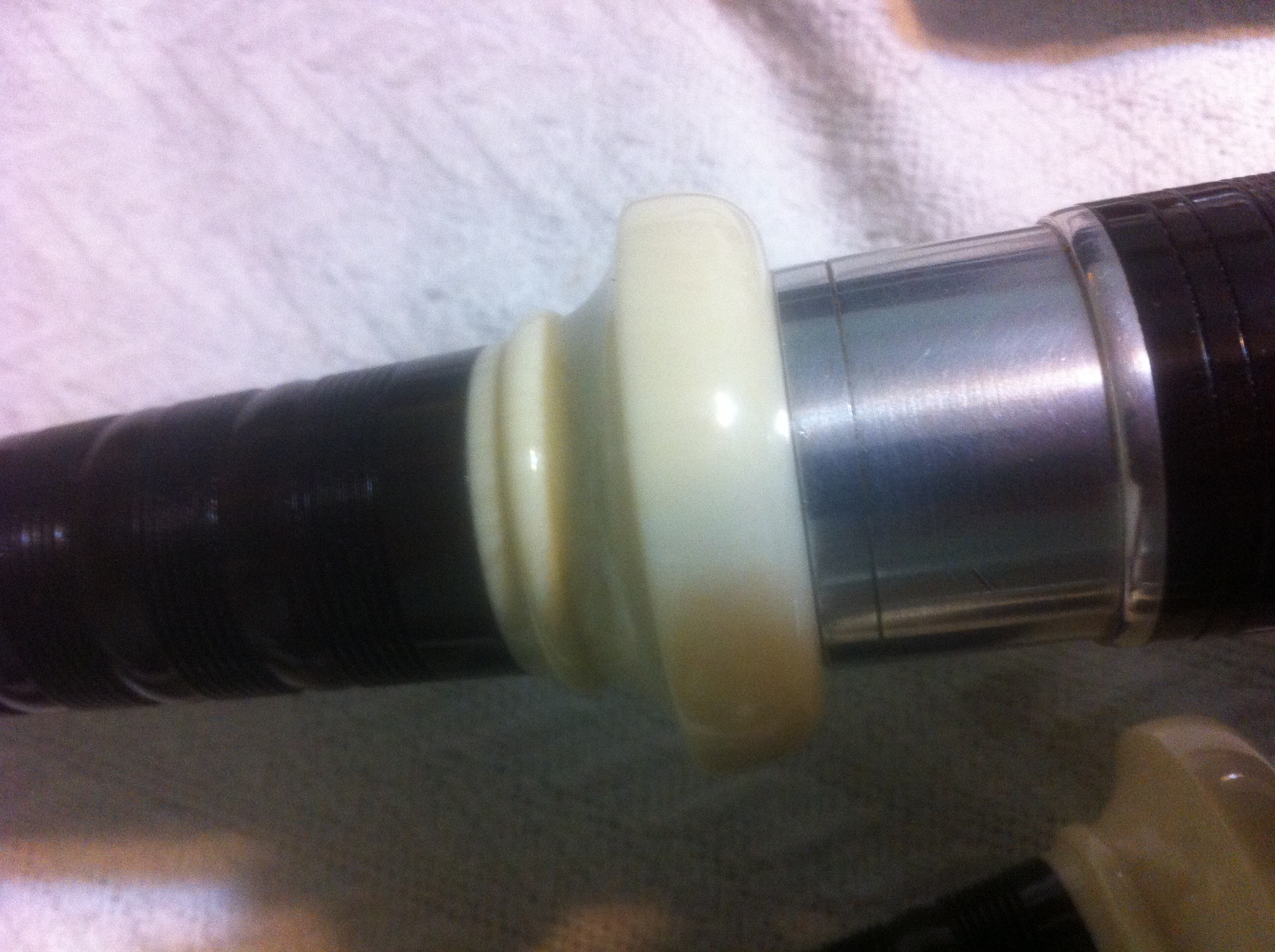
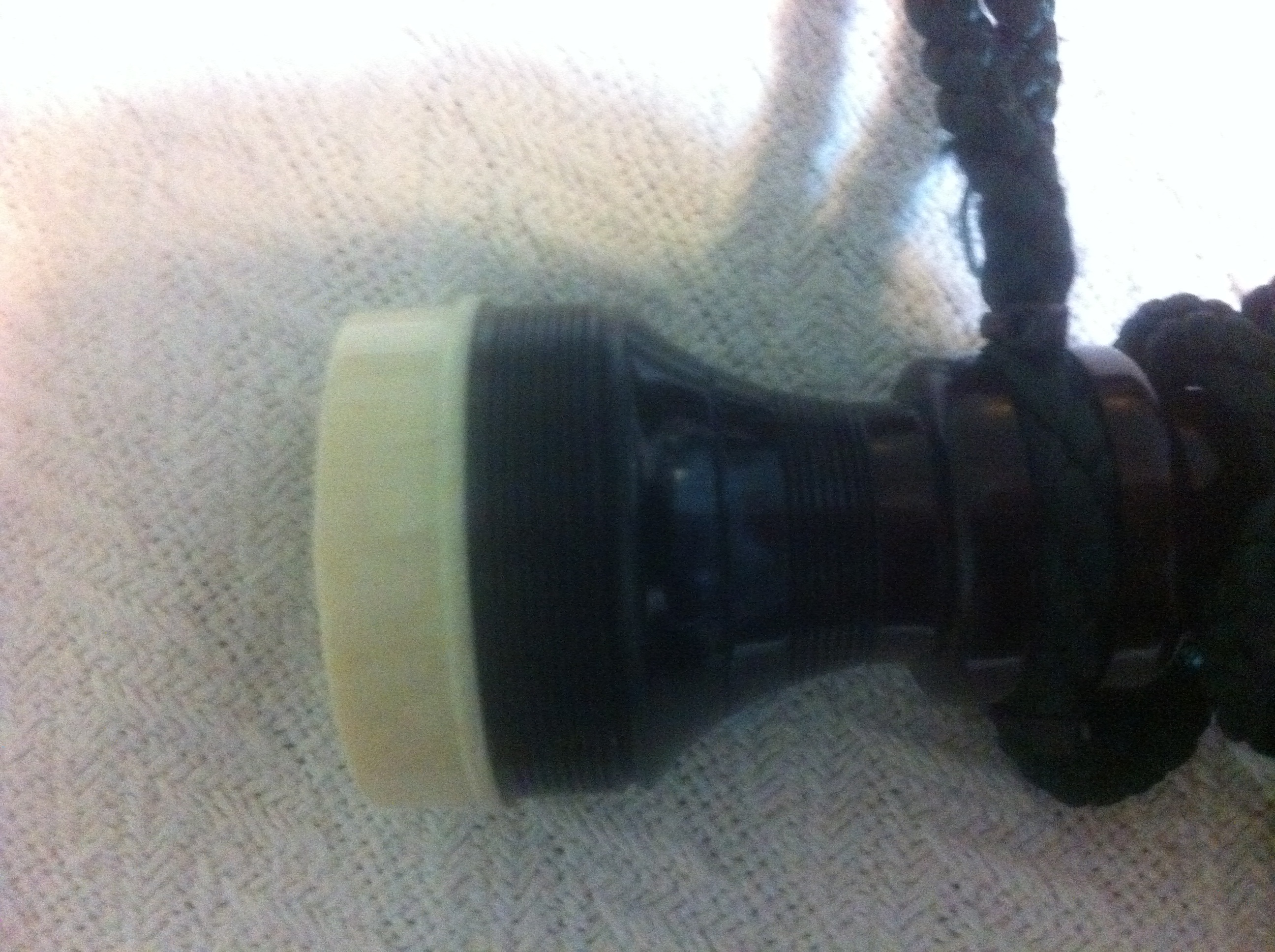
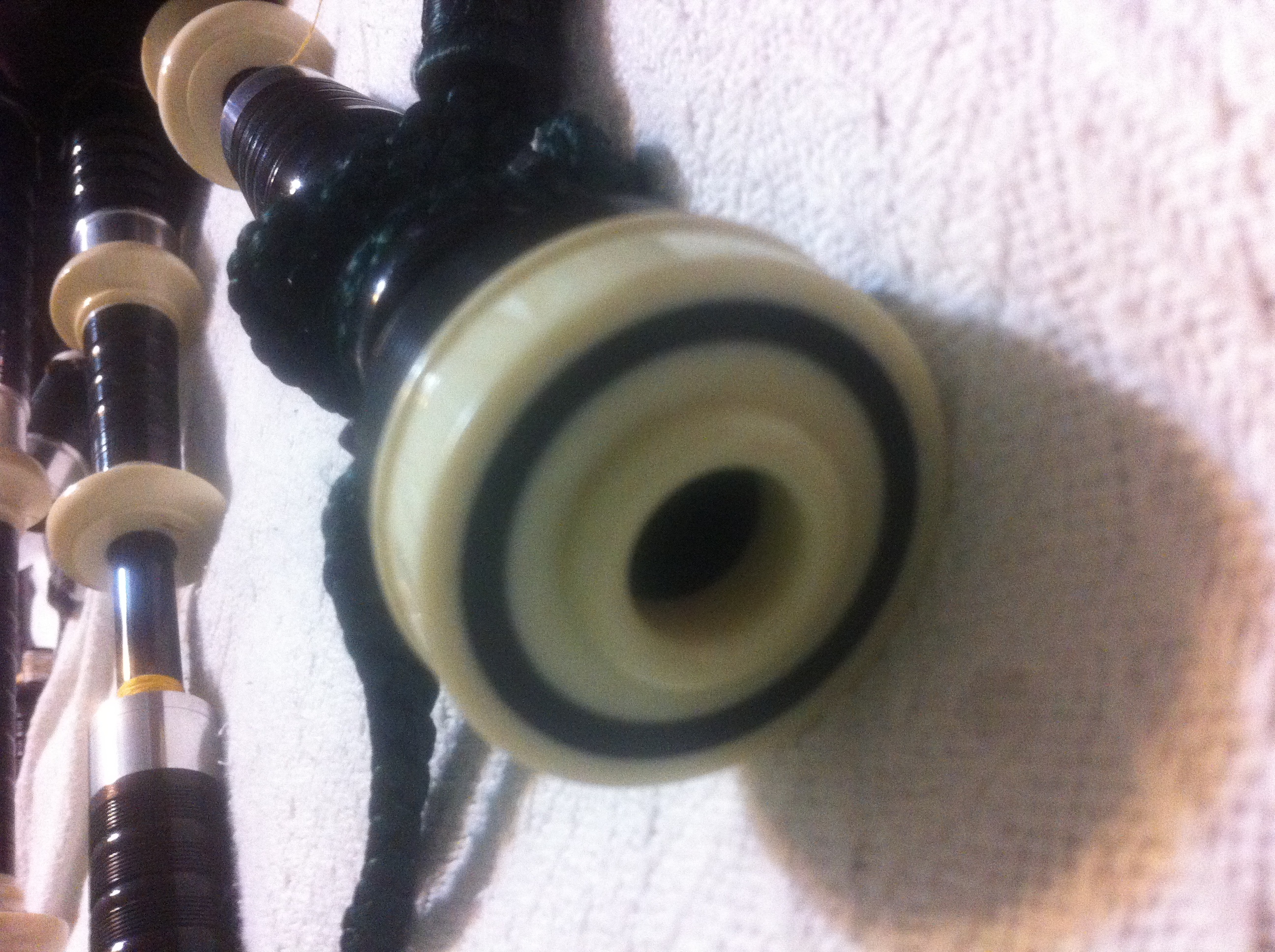
Here are some pictures of the Chris Terry pipes with imitation ivory mounts and what I believe to be aluminum ferrules.

projmountbottomprojmountbelldronetop

Some observations about the pipes:

1. Upon receipt (they’re used) I couldn’t really figure out which tenor top went with which tenor bottom. This speaks to the quality of the dried wood and the manufacturing process, the two tenors are nearly identical.

2. I put a new Rocket bass coupled with old Rocket tenors (louder than the new Rocket tenors) and got a great sound. I was out on the pins but the drones were solid. A noticeable ring off the drones helped really dial in E on the chanter. Also speaking to the quality of manufacture is that the tenor tops weren’t floppy despite just barely hanging on. There’s no warping throughout the entirety of the tenor tuning chambers.

3. These are great pipes and I look forward to having the time to try many different drone reeds in them. I’ll be hard pressed to take the Rockets out though. Someday!

Recordings taken from the end of my session with the Campbell Bb chanter with Terry pipes are below. Some of them can be heard in the video above, some were recorded after the video was turned off. These are offered in chronological order so I’m still fine tuning throughout, the best is last, fwiw.

Fair maid + some reels (under blown high A to keep E in check) – meh audio

74th’s Farewell, Battle of Waterloo, 51st Highland Division (blowing out high A now) – better audio, darn fingers!

Green Hills of Tyrol, When the Battle’s O’er, Marcus McLaurin (E and B finally taped to be in tune so high A can be blown out) – best audio