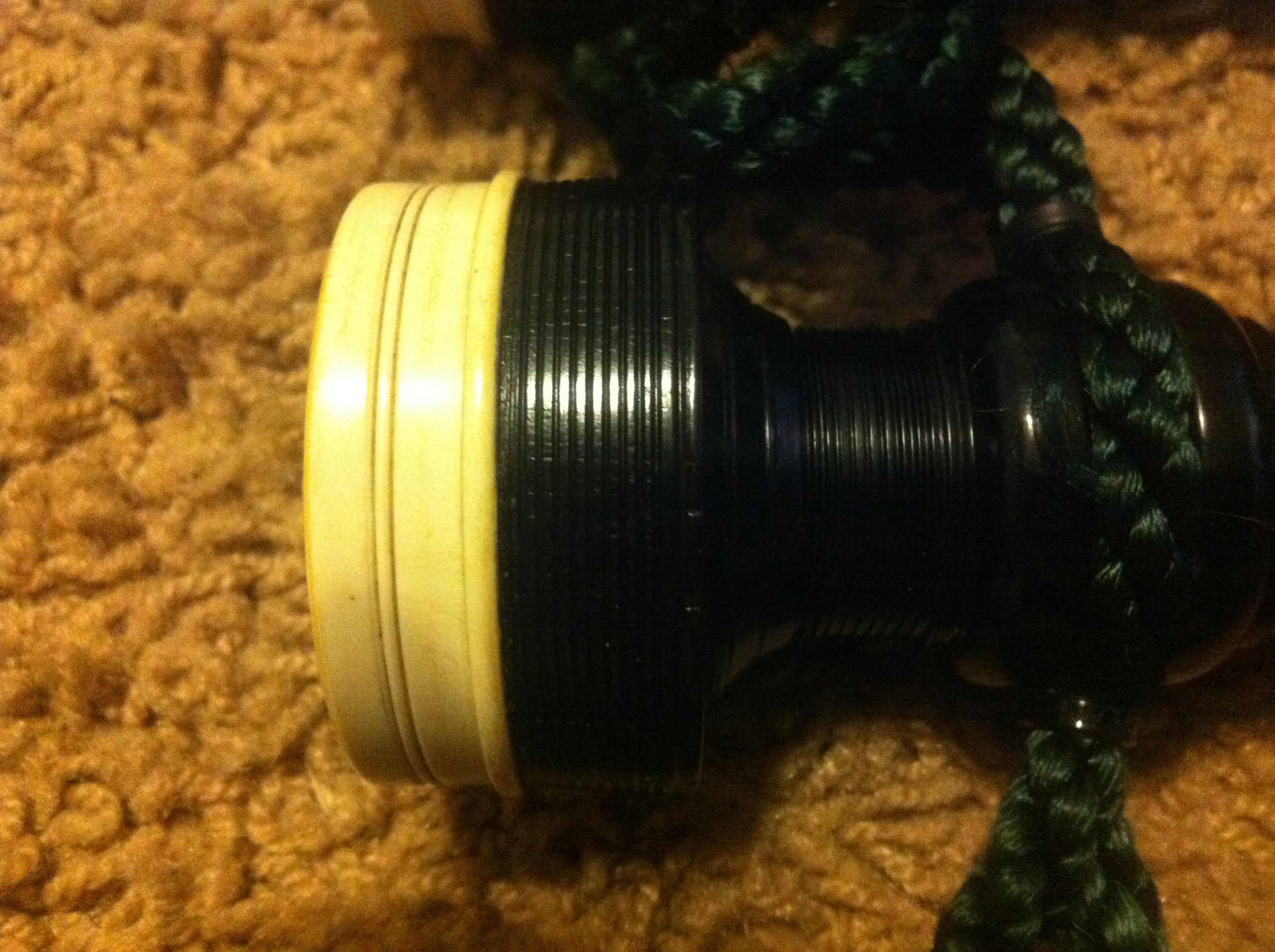
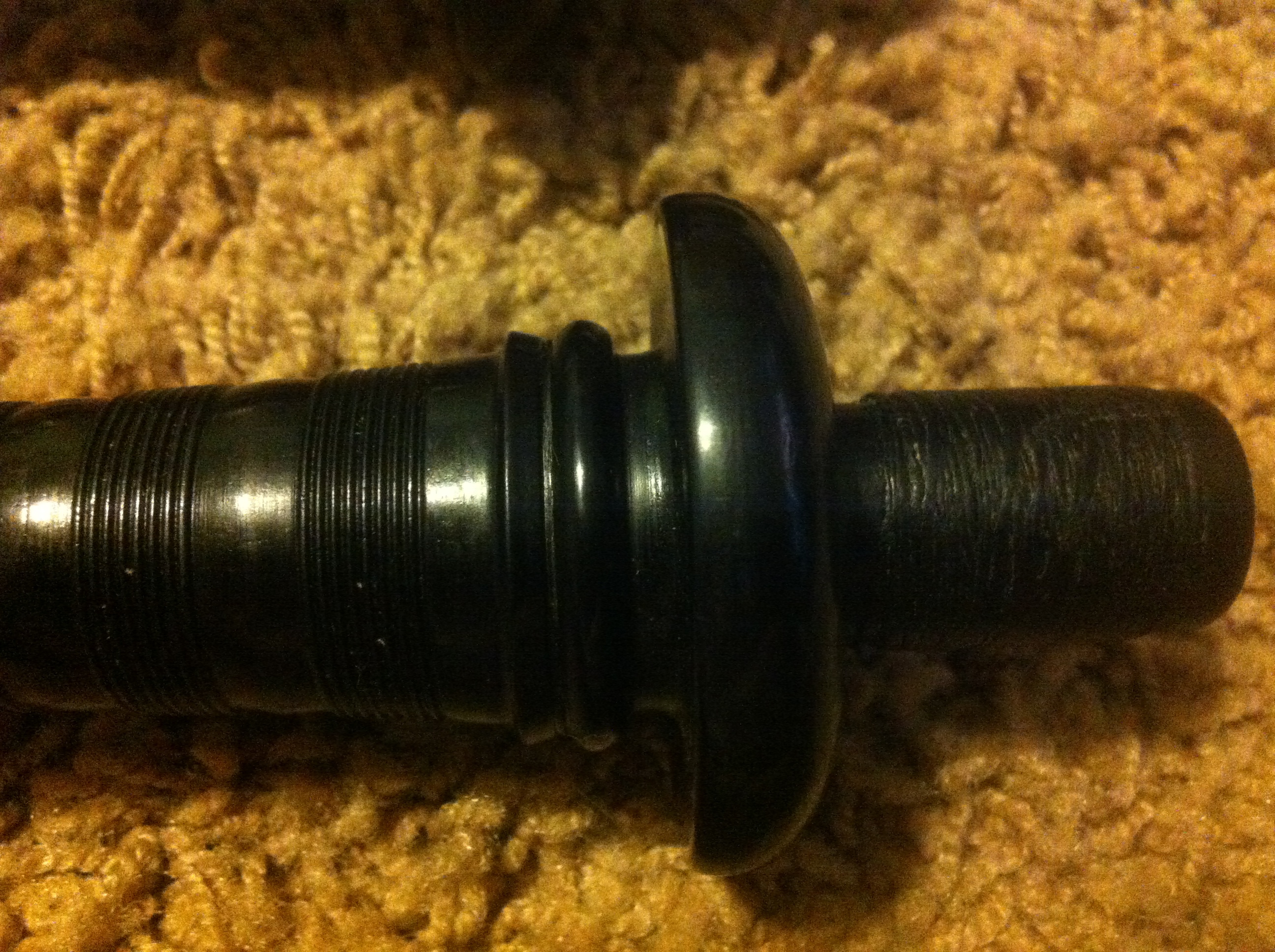
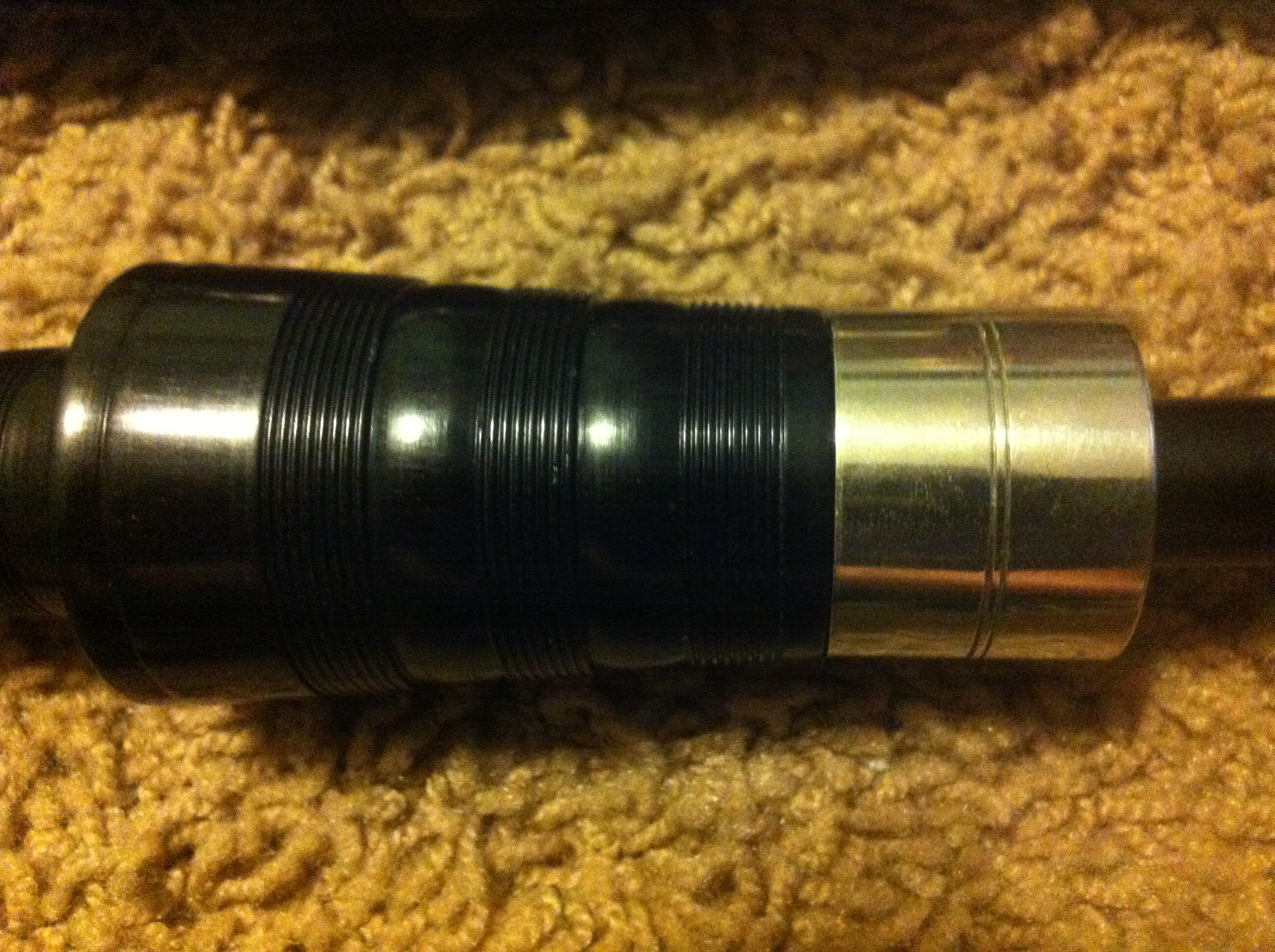
Ebony Robertsons, again!

I once again have a (different) set of Robertsons on loan to me. Casein ringcaps and bushes, nickel ferrules with scribe lines around the center, ebony pipes with, I guess, ebony black casein projecting mounts. They are beautiful pipes, the casein, if that’s what it is, hasn’t gone all chalky and ugly.
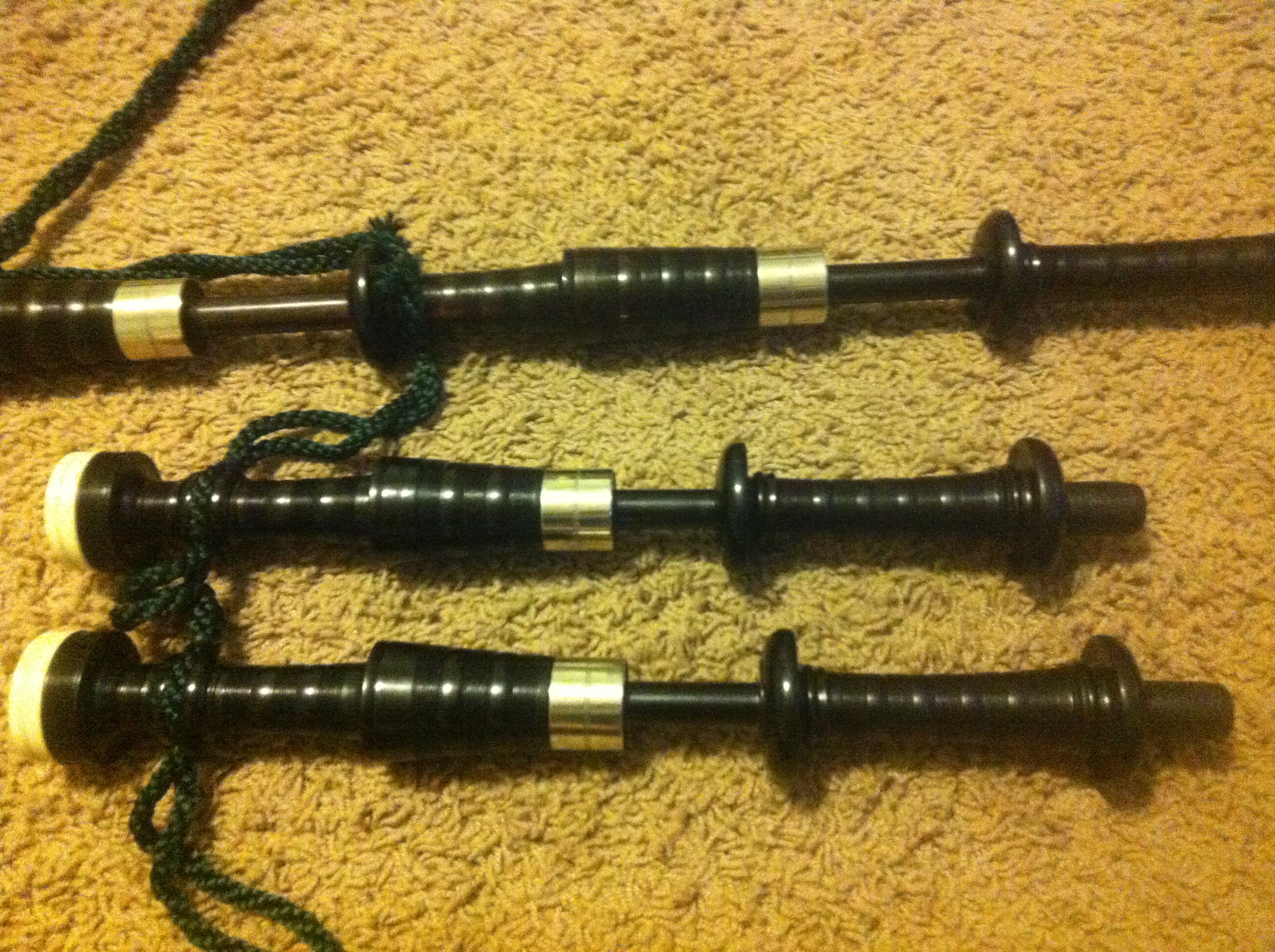
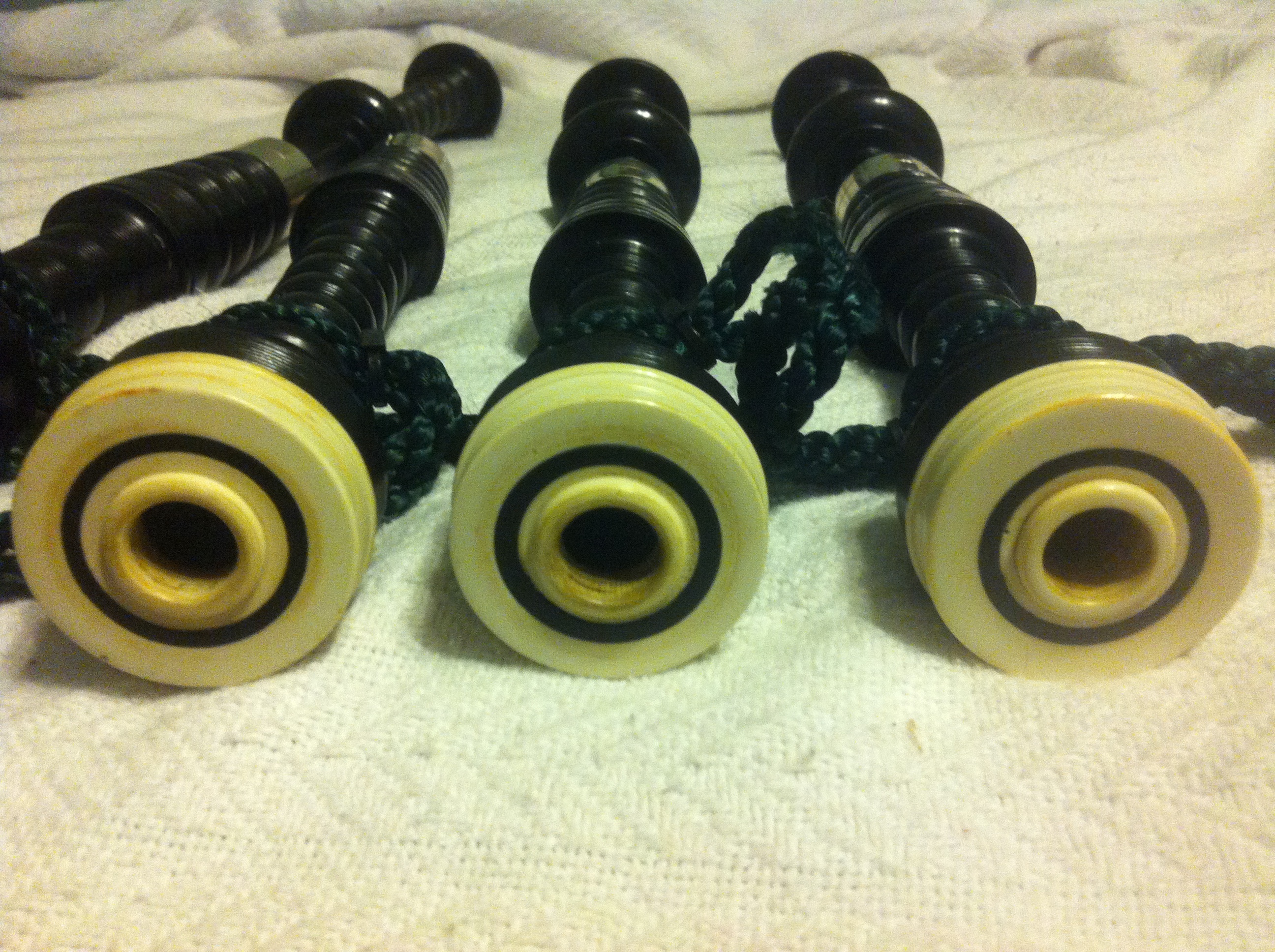
First up in what will probably be a series of posts, some old Canning drone reeds I had laying around. It’s a very bass dominant sound at the moment. What is striking is that the bass tunes quite low relative to all other Robertsons I’ve played. But, these reeds have been around a while so who knows.

Cowal Gathering, Inveraray Castle, Lochiels Awa to France – facing mic

Donald MacLeod and Rakes of Kildare – facing away from mic

Echo Lake, Highland Harry, Bessie McIntyre, Captain Lachlan MacPhail of Tiree – facing mic

Tenor tuning chambers are .02″ shy, consistently, of what I have on record for nominal Robertson, but otherwise all bores are what you’d expect to see. I’d be keen to spice up the tenors a bit so some Kinnaird will be next to try, Selbie may be a good bet as well. I also closed down the bridles a bit on these Cannings, perhaps I should just open them up a tad to regain some volume.

On a whole other topic, Austin, a subscriber, sent in some interesting audio files of his two Sinclair bagpipes, one from the 50’s and the other from the 70’s. Both played with exactly the same setup (Ezee tenors and original Kinnaird bass). Interesting the different sounds emitted from the same maker, just different time periods.

50’s sinclair_Ezeedrone tennors_Kinnaird bass

70’s Sinclair_Ezeedrone tennors_Kinnaird bass

G1 Platinum reed in a Colin Kyo chanter

The G1 platinum reed was so impressive in the G1 chanter I wanted to establish a baseline for its performance and try it in a Colin Kyo chanter. The first thing I’ll note is it wasn’t quite as loud in the CK chanter. The G1 is very much a band chanter and I like to consider the CK an all around chanter (I use it for solos and in my band), but you may call it a solo chanter if you’d like. I’m not sure I’d use the G1 in solos as I’d like my drones to be a more significant fraction of the overall sound. That being said, I’d say 50% of the big volume I got with the G1 chanter in the previous post was from this reed, it’s a nice big reed. The CK also tuned to 480 Hz instead of the 486 Hz of the G1 chanter. The C# was a tad bit flat in the CK, which is not uncommon, so I taped the low A down to the C#, but this ultimately didn’t affect the pitch the chanter tuned at too much, less than 1 Hz for sure. Pictures comparing the two chanters can be seen directly below with the CK on the left, G1 on the right. You’ll notice the G1 is a longer chanter, and therefore longer than most chanters. The hole spacing is very similar to the CK chanter which is why it is a very comfortable chanter to play. The tape on both chanters is indicative of what was required for the G1 platinum reed; although notice a lot of tape on the G1 chanter isn’t actually covering the hole very much or at all, it’s there just in case. The other reed, Husk, is what was in the poly CK beforehand; pay it no attention, I just needed a place to put it after swapping reeds and the G1 reed seat seemed like a good spot. You can click on the pictures for larger versions.

Now for some tunes! Sorry I didn’t get the high G and A in until the latter recordings, I was in a hurry. The pipes are my 1950’s Hendersons with Atherton MacDougall spec Rockets.

Scales and Wings facing the mic, facing away, facing away, facing the mic

Echo Lake, (Don’t Remember), Room 35, Moonshine – facing the mic

Calista Anne McLaurin, Latisha McLaurin, Rory Gallagher, 1st Hype Cowboy Division – facing away from the mic

Leaving Port Askaig and The Quaker – walking back and forth perpendicular to the mic, first recording so high G a little out